Board Member Jacqui Szeto-Meiers on Asian Heritage Month and Closing the Gender Health Gap
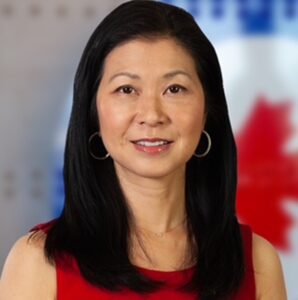
We’re proud to introduce one of our newest members of the Women’s College Hospital Foundation Board Jacqui Szeto-Meiers.
This Asian Heritage Month, Jacqui shares why Women’s College Hospital’s commitment to equity feels deeply personal, and the impact she hopes to help create for the future of healthcare for women.
What drew you to join the Women’s College Hospital Foundation Board?
Women’s College Hospital Foundation is not afraid to challenge how healthcare has traditionally been done. They are focused on research, innovation and finding ways to close the gender health gap in real and meaningful ways.
At this stage of my life, healthcare feels very personal. As women age, we often realize how complicated the system can be to navigate and how much we still do not know about women’s health. Too often, women are left to advocate for themselves while caring for everyone else around them. I wanted to be involved with an organization that is helping change that conversation and improve outcomes for future generations.
Why did this feel like the right moment to get involved?
Ontario is growing quickly and becoming increasingly diverse, but our healthcare system has not fully evolved to meet those changing needs.
From my own experience, navigating healthcare can sometimes feel overwhelming—long wait times, fragmented information and too much responsibility placed on patients to figure things out themselves. As we age, it becomes even more important to have access to better research, better information and care that is more personalized and preventative. I believe this is the right moment to rethink how healthcare is delivered.
Women’s College Hospital has a long history of championing equity in healthcare. What part of the Foundation’s mission resonates most with you?
The focus on equity resonates with me the most.
I appreciate that Women’s College Hospital is willing to ask difficult questions about who is being overlooked, underrepresented or underserved in healthcare and research. Real change happens when we acknowledge those gaps and actively work to close them.
How has your background shaped the way you think about healthcare access and advocacy?
I was born in Canada but grew up in Hong Kong, so I have always had an “East meets West” perspective. That has made me open-minded and aware that there is no one-size-fits-all approach to healthcare.
It also taught me that healthcare is not just about access—it is about whether people feel comfortable, understood, respected and heard.
Women are often the caregivers and the glue that hold families together, yet they are usually the last to prioritize their own health. If we do not take care of women, the impact goes far beyond the individual—it affects families and entire communities.
Why is representation in leadership important to you?
Because different lived experiences bring different perspectives, and those perspectives lead to better decisions.
Representation is not just about visibility. It influences what gets prioritized, where resources go and whose voices are included in the conversation. Having diverse perspectives around the table helps reduce blind spots and leads to more thoughtful and inclusive leadership.
What would you say to the community about the importance of giving back?
Philanthropy is about creating impact beyond ourselves.
Last fall, I participated in the True Patriot Love all-women Nahanni River expedition alongside female veterans. For someone who has never white-water canoed, camped or considered herself an outdoors person, it has pushed me far outside my comfort zone. But it has also reminded me how important community, resilience and support are.
Giving back is not only about financial support. It is about showing up, contributing where you can and helping create opportunities and better outcomes for others.
What impact would you most like to see WCHF help make possible over the next five years?
I would like to see women feel more informed, supported and confident when navigating their healthcare journeys. I also think it is important to demystify and normalize conversations around women’s health issues. Too often, women suffer quietly or feel uncomfortable discussing what they are experiencing. The more we bring these issues to the table openly and thoughtfully, the better care, research and support women will ultimately receive.
As women age, we face many health issues that are still under-researched and often misunderstood. Sometimes it can feel like you are trying to piece together your own roadmap without enough guidance or clarity.
I hope that over the next five years we continue to see meaningful progress in research, preventative care, and more personalized approaches to women’s health—so women feel the healthcare system is working with them, not against them.
What does Asian Heritage Month mean to you personally?
Asian Heritage Month is a time to celebrate the cultures, values and contributions that Asian communities bring to Canada’s multicultural fabric.
For me personally, it is also a reflection of my own journey growing up between cultures and how that shaped my perspective on family, resilience, education and community. It is important that we continue to create space for representation, inclusion, and diverse voices in all areas of society.
Outside of work, what sparks joy for you?
I love traveling, relaxing at the cottage with my family and pampering our dog. I also really enjoy mentoring the next generation—whether it is young women entering business or people trying to find their own path. It reminds me why I love what I do and why it is important to help create opportunities and open doors for others.
What We Do
Women’s College Hospital is revolutionizing healthcare for a healthier, more equitable world.